
At home with Studio Shields
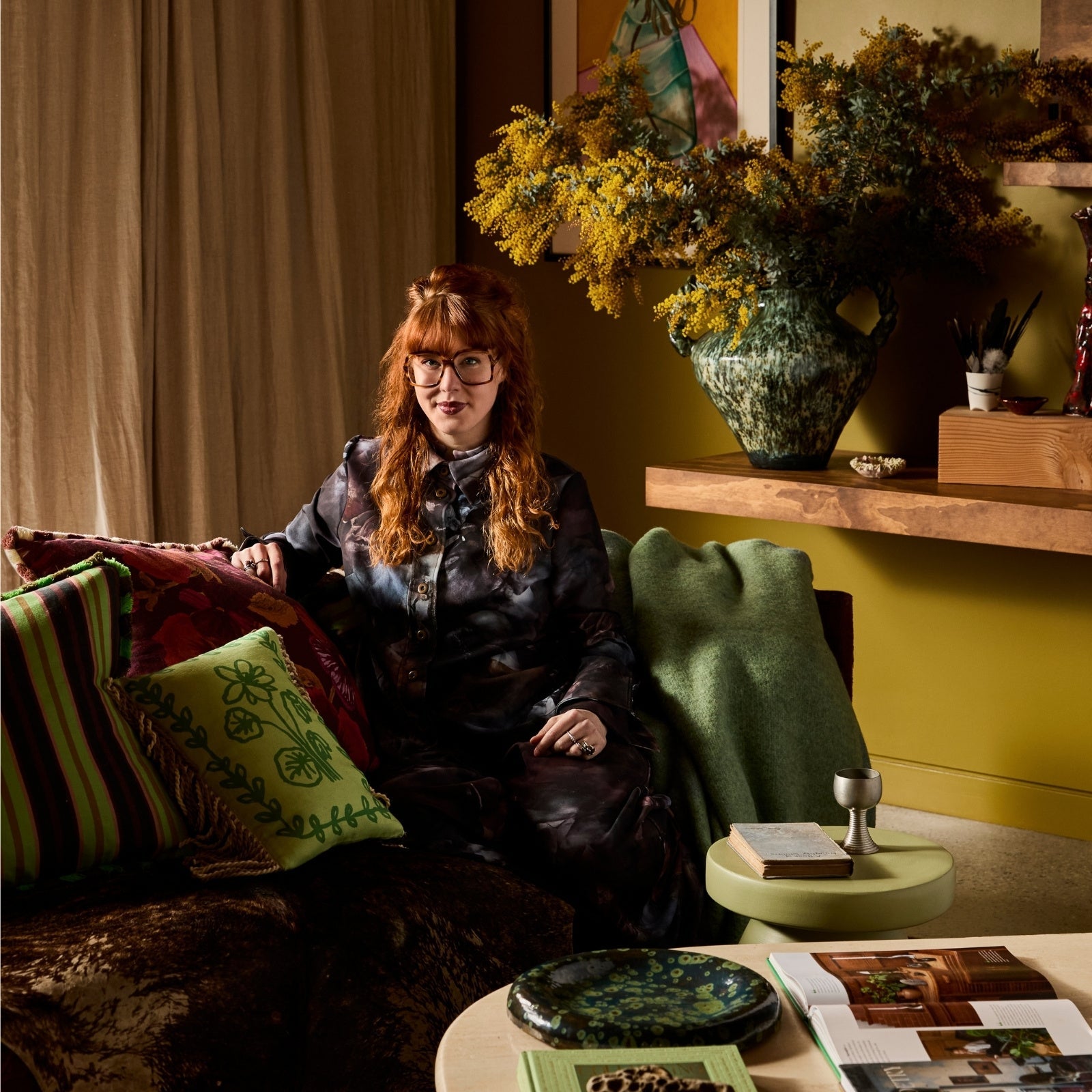
We've long admired Ruby Shields, Founder & Principal of Studio Shields, for her confident approach to colour, pattern and layering. Her interiors feel collected rather than decorated, with colour, texture and meaningful pieces coming together to create spaces that feel deeply personal and lived in.
It's an approach we feel a natural affinity with at Bonnie & Neil, where pattern and colour are at the heart of what we do. We were fortunate enough to be invited into Ruby's own home to see her philosophy in practice, and to talk about what it means to make a space your own.
We sat down with Ruby to talk about where colour begins, how she creates depth and personality through layering, why a home should never feel too curated, and what makes handmade pieces so meaningful.

Where does colour enter your design process? Is it usually the starting point, or does it come once the bones of a space are established?
Colour is there from the very beginning, but not in the sense of choosing paint swatches. It starts with asking how someone wants to feel in their home. Every project has a personality, and colour becomes the language that expresses it.
I often think about colour almost as choreography. One room shouldn't shout over the next; it should lead you somewhere. The way morning light moves through the house, where you pause with a coffee, the view from the hallway into another room... all of those moments influence the palette. By the time I'm selecting actual colours, they've already been living in my head for weeks. The paint is simply the final expression of an idea that has been building from day one.


If you were styling a home for someone just starting to experiment with colour and pattern, where would you tell them to start and where should they be a little brave?
People often think colour is the scary part, but I actually think commitment is the scary part.
I'd tell them to stop treating every room as its own little project and instead think about the whole house as one story. Even if you're only introducing colour through cushions, artwork or a rug, make sure those pieces are talking to one another.
And where should you be brave? The surfaces you assume should stay neutral. A coloured ceiling. Rich skirting boards. A deep wall wrapping around a room. Those decisions change the atmosphere far more than another beige sofa ever will. Most people are surprised by how quickly bold choices stop feeling bold and simply start feeling like normal.
Layering is such a signature of your work. When it comes to textiles specifically, how do you decide what to layer in, and what to edit out?
I rarely think about textiles as decoration. They're another material in the room, just like timber or stone.
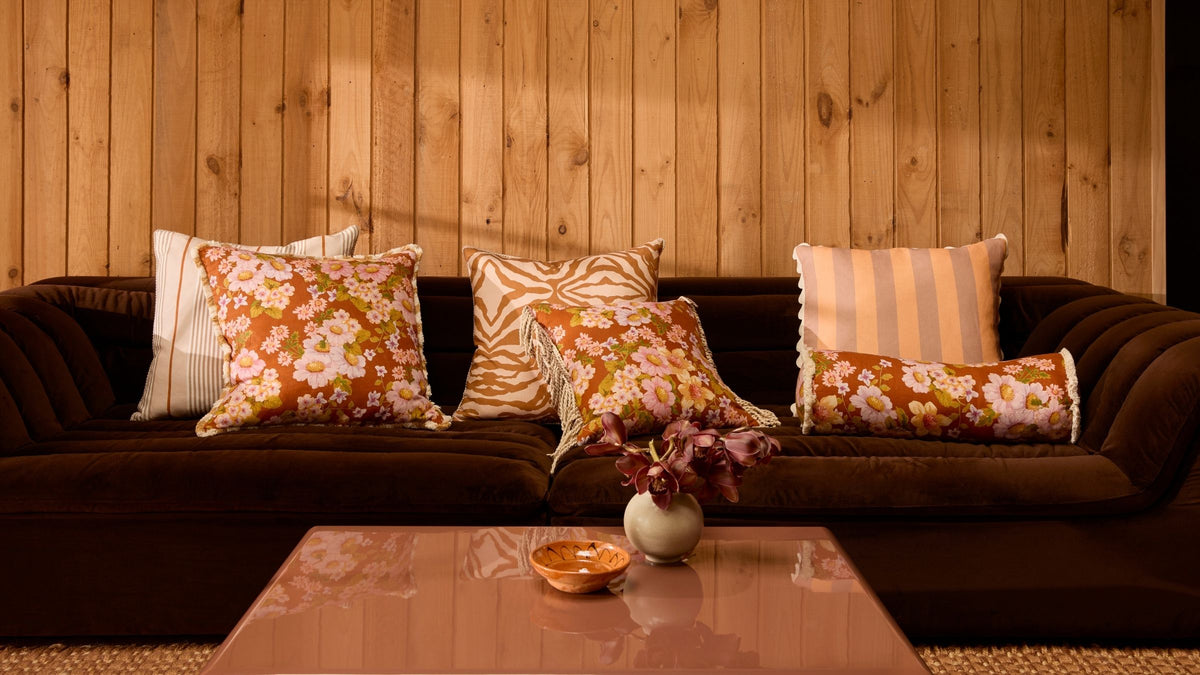
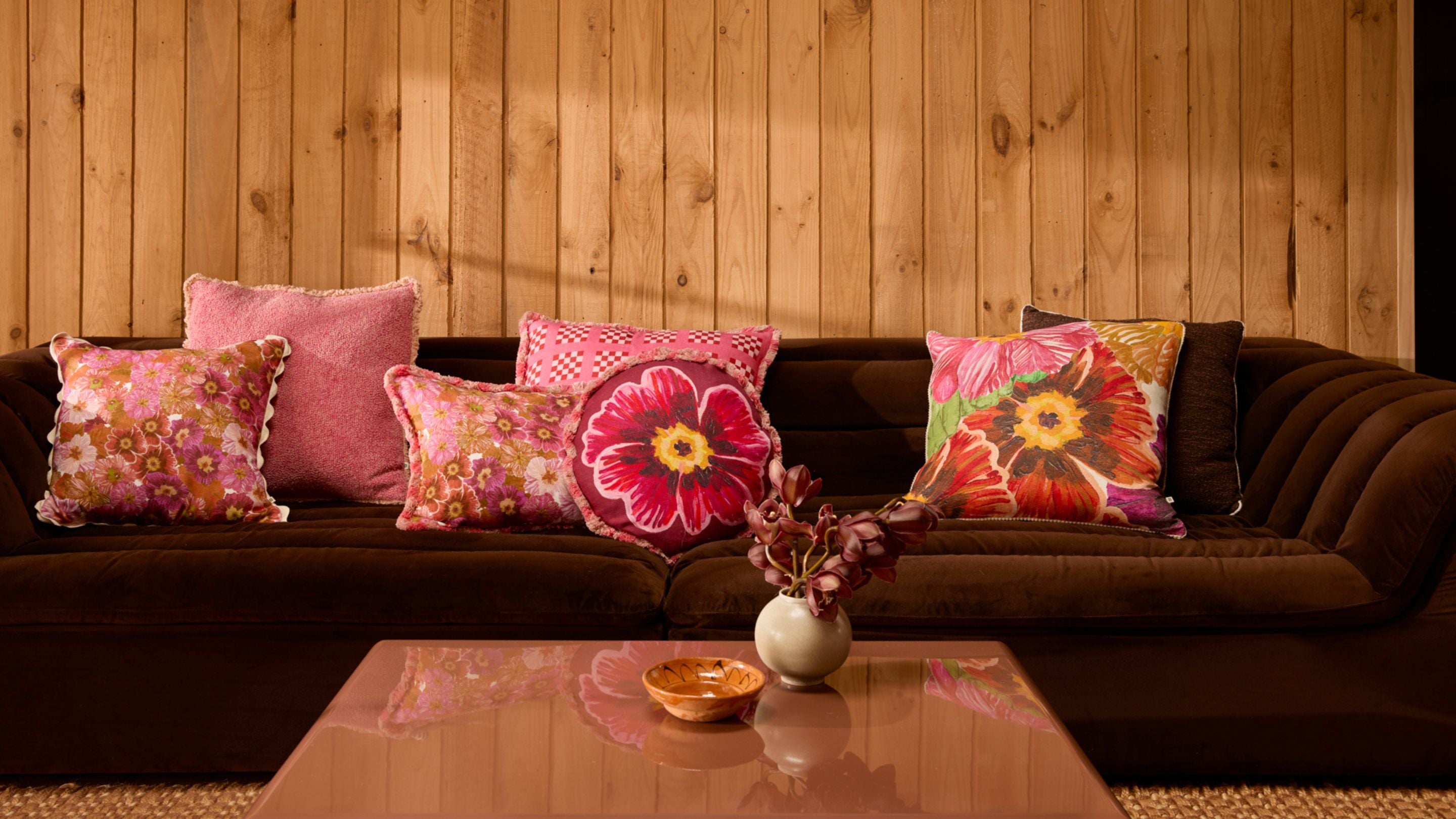
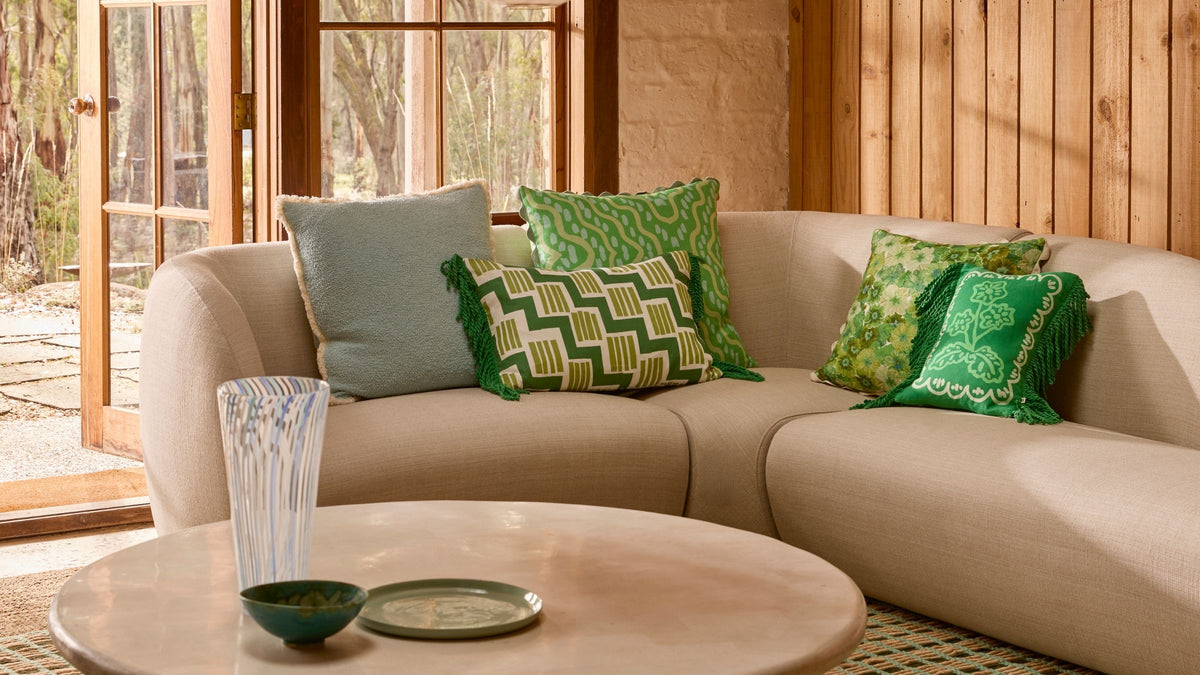
When I'm layering a space, I'm usually looking for contrast and conversation. A chunky woven rug against polished stone. Vintage corduroy beside mohair. A large-scale floral sitting comfortably with a tighter stripe. An earthy burgundy balanced by a vibrant punch of lime green. The magic isn't in making everything match; it's in allowing different personalities to sit together without one overwhelming the others.
People often assume layering means adding more, but I think it's more about creating balance. If everything is patterned, nothing stands out. If everything is bold, the room can become exhausting. Every expressive piece needs something beside it that allows it to breathe.
Editing is often about removing repetition. If five fabrics are all trying to be the hero, none of them are. I'd rather have fewer pieces that each bring a different quality to the room than a collection of beautiful things all competing for attention.

Is there such a thing as "too curated"? How do you keep a considered room from feeling stiff or showroom-like?
Absolutely.
The homes I connect with most have evidence of the people who live there. A stack of books that's been read three times. Children's drawings tucked into a shelf. A chair that's permanently angled towards the afternoon sun because that's where someone likes to sit.
Design shouldn't erase life; it should make room for it.
I think people sometimes mistake styling for perfection. To me, styling is simply helping a home tell the truth about the people who live there. Once everything feels a little too perfect, you've probably edited out the very thing that made it interesting.
Your husband Patrick makes bespoke pieces for your projects, much like our prints start as hand-painted originals before becoming linen. What do you think people lose, or gain, when something is made by hand rather than mass-produced?
When something is made by hand, it carries the fingerprints of the person who created it. Not always literally, but emotionally.
There's an understanding that someone solved problems along the way. They adjusted proportions. They responded to the timber, stone or metal. They made decisions that couldn't have happened on a production line.
Mass production has its place, but handcrafted pieces have a generosity to them. They hold time, knowledge and care, and I think we feel that, even if we can't always explain why.
In a world that's becoming increasingly automated, those human marks feel more valuable than ever.


What's a piece in your home you'll never part with, and why?
This one is hard because there are so many deeply personal pieces in our home. Anything Patrick has made will never leave us, but if I had to choose just one collection, it would be my ceramics.
Every piece carries a memory. Some were discovered in op shops, others were long-awaited pieces from Pépite or Ma House splurges. Some were gifted by friends or the artists themselves, while others mark anniversaries or milestones. They're more than objects; they're little chapters of our life together.
I simply couldn't imagine our home without them because, to me, they are the life of the home. They're the pieces that make it feel lived in, loved and ours.
The things I treasure most aren't valuable because they're rare. They're valuable because they've been there through years of ordinary moments. Morning coffees, dinner parties, celebrations, difficult seasons and everything in between. That's what I hope every home holds. Not just beautiful objects, but pieces that collect stories and become part of a family's history.

Photography by Martina Gemmola
Read more
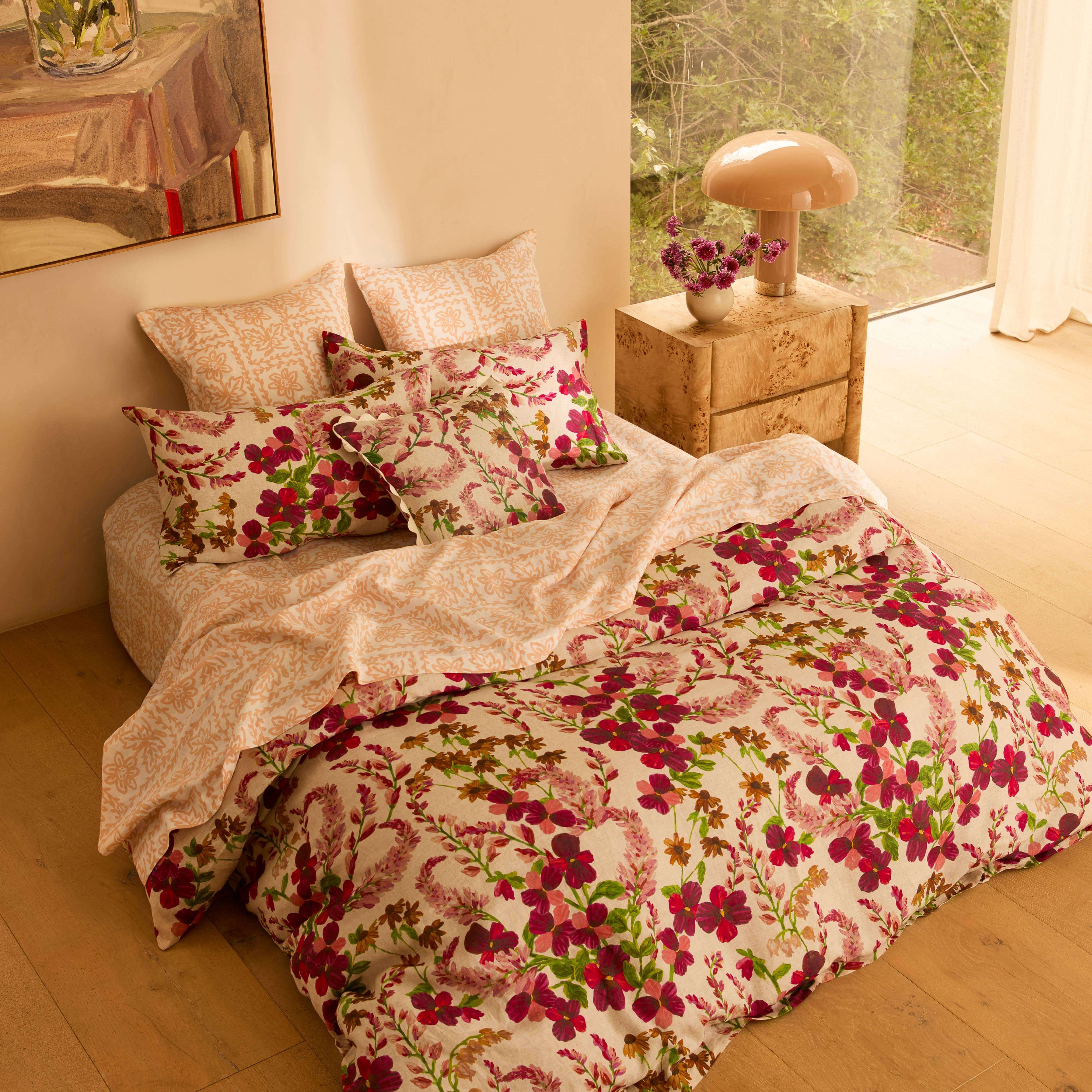
Some things take time. This one took two years. We expand our linen bedding collection - French flax linen, stonewashed for softness from night one, made to last and only get better.
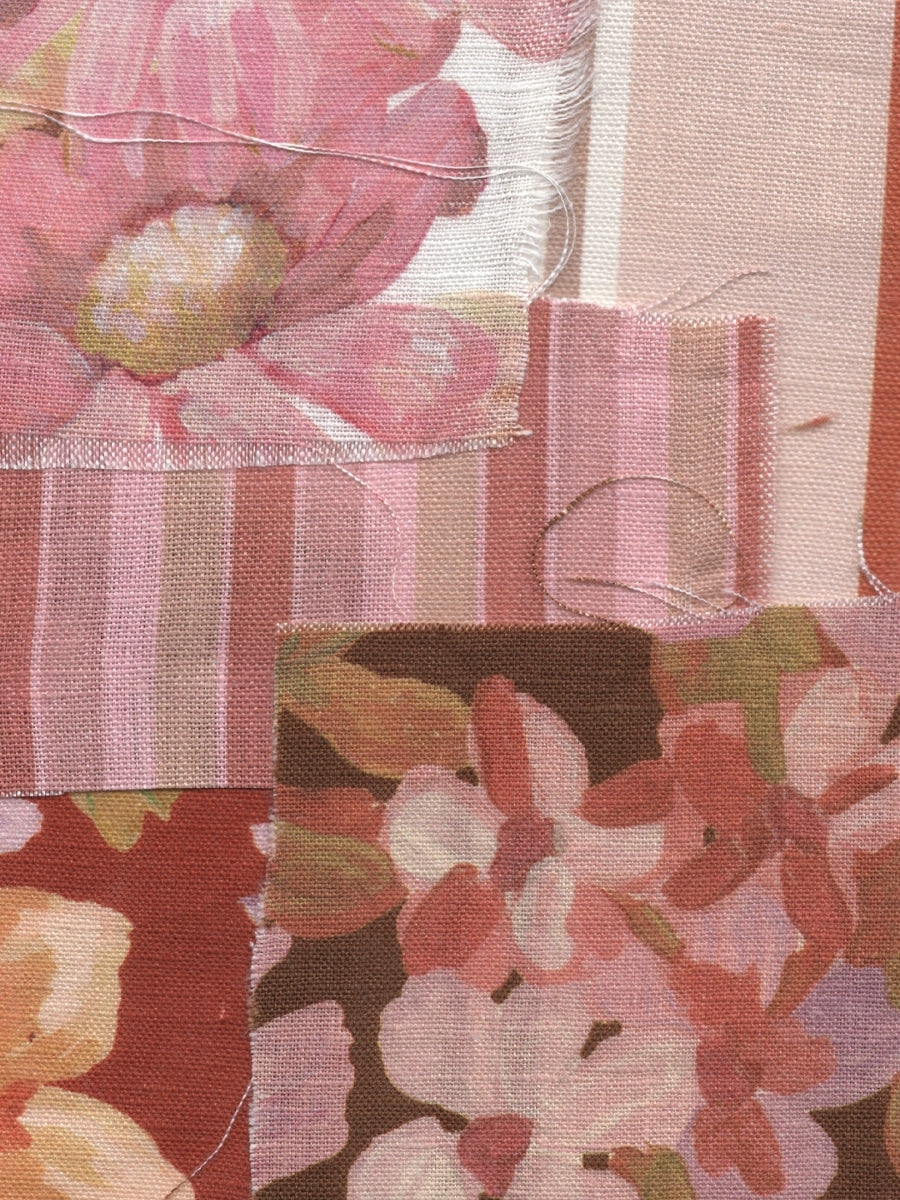
There's a particular kind of quiet you find in a garden. Pressed flowers, watercolour swatches, sketches of billowing roses. We can't wait to share it with you!